
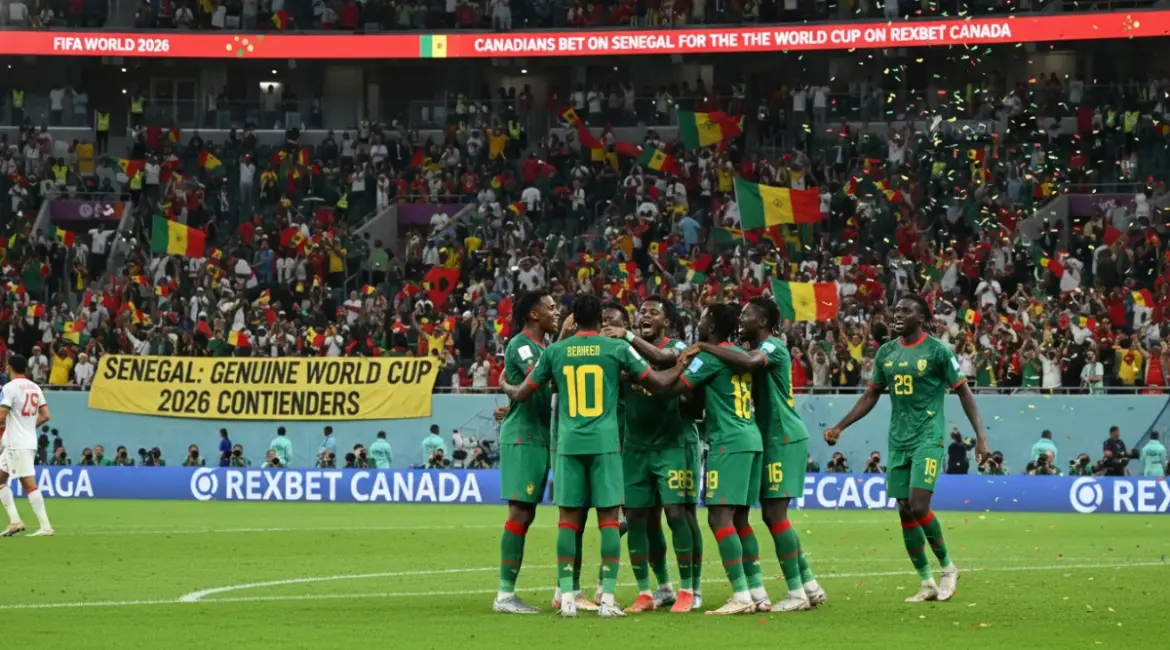
Senegal enters the 2026 World Cup with real belief, not just hope. Head coach Pape Thiaw has made that clear, and his confidence reflects how far the national team has come.
The Lions of Teranga are no longer treated as a sentimental underdog. They are seen as one of Africa’s most complete teams, with a mix of experienced stars, polished academy graduates, and rising dual nationals.

That success story, however, has a cost. Senegal’s football model has helped produce elite players at a remarkable rate, but it has also exposed how little of the value created by that talent stays in the country.
A Winning Model Built on Uneven Returns
Senegal’s strength starts with its academy system. Places such as Generation Foot, Diambars, and Dakar Sacre Coeur have become reliable pipelines to Europe, offering coaching, schooling, and medical support that many local clubs cannot match.
Those academies have also been tied to long-term European partnerships. FC Metz’s relationship with Generation Foot is one of the best-known examples, and it helped launch players such as Sadio Mane, Ismaila Sarr, and Pape Matar Sarr.
- The academies identify and develop elite prospects early.
- European clubs often secure first access to those players.
- Most of the financial upside is realized abroad, not at home.
A reported sample of 13 academy-trained Senegalese internationals shows the imbalance clearly: local academies received only €100,000 in initial transfer fees, while later resale value reached €81.2 million, with total career transfer fees topping €411 million.
For Senegal, that means prestige on the pitch and pressure off it. For domestic clubs, it often means thin budgets, aging facilities, and little public visibility.
The Money Problem Behind the Progress
The deeper issue is structural. Foreign investors and European clubs benefit from a system that turns Senegalese talent into global assets, while many local institutions remain underfunded.
Even when solidarity payments are due under FIFA rules, local clubs have sometimes had to fight to receive them. Nicolas Jackson’s move to Chelsea was cited as one of the cases that highlighted the problem.
This is the paradox at the center of Senegalese football: the national team grows stronger because the domestic game is weak enough to supply talent cheaply.
How Senegal Keeps Expanding Its Talent Pool
Senegal has also become more sophisticated in recruiting from the diaspora. The federation now targets high-level prospects in Western Europe before they fully commit to another national setup.
That strategy is based on two factors: family identity and competitive ambition. Players with Senegalese roots are being offered both a cultural connection and a realistic path to major tournaments.
- Ibrahim Mbaye, a PSG forward, has been among the newer additions.
- Mamadou Sarr, a Chelsea defender, is another key dual-national pickup.
- Both had previously represented France at youth level.
This approach gives Senegal more depth and flexibility, especially in positions where youth, speed, and tactical discipline matter most.
Why 2026 Feels Like a Defining Moment
Senegal’s current group combines veterans and teenagers in a way few national teams can match. Idrissa Gana Gueye can still anchor midfield duties while younger players push the team’s tempo and athletic ceiling.
The 2026 tournament may be the last major chance for icons such as Sadio Mane, Kalidou Koulibaly, and Edouard Mendy to shape Senegal’s place in world football.
A Group That Will Test Everything
The draw is unforgiving. Senegal will face France, Norway, and Iraq in Group I, and the opener against France in New Jersey will reveal a lot about their ceiling.
If Senegal survives the group stage, its blend of discipline, physical power, and squad depth makes it dangerous in knockout play. The team has the quality to challenge serious opponents, but the system behind it still needs repair.