
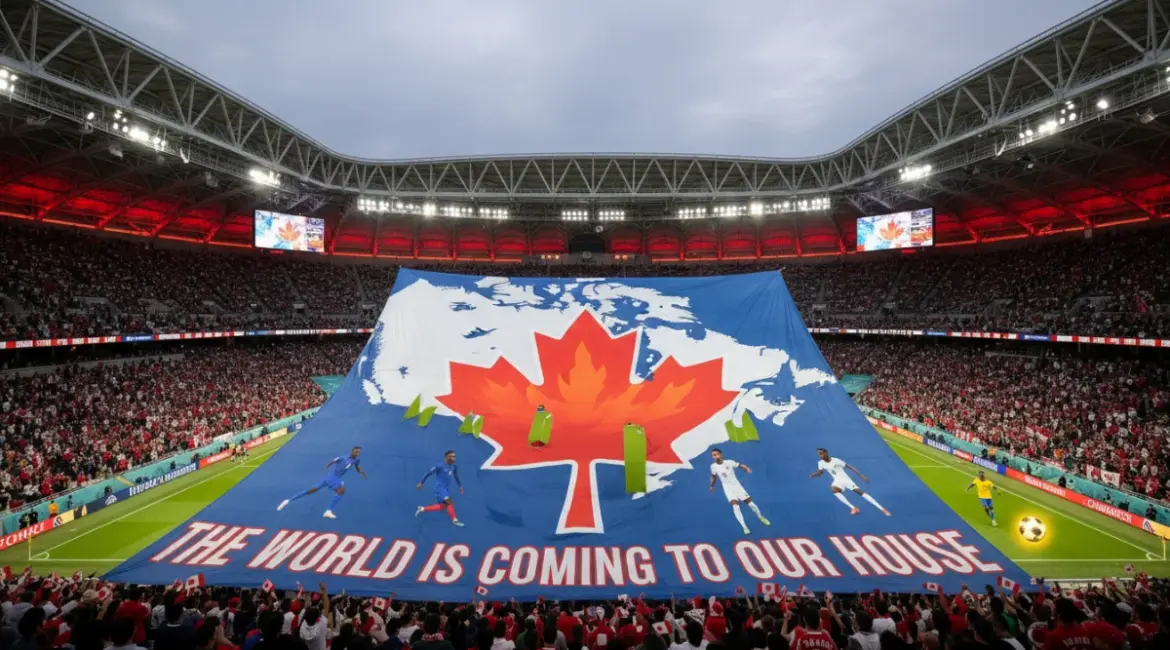
The 2026 FIFA World Cup will put North America at the center of global soccer, with Canada, Mexico, and the United States sharing hosting duties. The scale is massive, the stage is familiar, and the pressure on the leading nations will be immediate.
Canadian supporters will naturally watch Les Rouges first, but the real conversation starts with the teams most likely to lift the trophy. With a 48-team field, more matches, more travel, and more chaos, the path to the title will test every contender in different ways.
The short list of title threats
These are the sides that enter the tournament with the strongest mix of talent, balance, and knockout-round experience.
- France — elite depth, speed, and proven tournament pedigree
- Brazil — attack-first quality with enough structure to survive pressure
- England — a complete roster if the mental burden does not crack them
- Argentina — champions with a winning edge that travels well
- Spain — technical control plus more direct attacking punch
- Germany — rebuilt, organized, and dangerous again
- Portugal — creative depth and no dependence on one star
- Italy — defense, discipline, and tournament survival instincts
- Netherlands — hard to break down and built for knockout soccer
- Uruguay — intense, physical, and uncomfortable for anyone
1. France still sets the standard
France remains the benchmark because it can win in multiple ways. Kylian Mbappé gives them a match-breaking weapon, while the rest of the squad supplies the depth that makes them so hard to manage over a long event.
Their biggest advantage is that no opponent can focus on only one area. If the front line is contained, the midfield can take over. If the game becomes physical, France usually has the athletes to handle it.
2. Brazil brings the flash and the balance
Brazil always carries weight, but this version looks especially dangerous because the talent is not only artistic; it is practical. Vinícius Júnior and Rodrygo can shred defenses, while the team’s defensive structure is far more reliable than in some past cycles.
That blend matters in a World Cup. Pure flair can win a group match, but balance wins titles.
| Team | Main Strength | Key Risk |
|---|---|---|
| France | Depth and pace | Managing travel and workload |
| Brazil | Creativity and control | Staying sharp under pressure |
| England | Midfield quality | Expectations and nerves |
| Argentina | Winning mentality | Transition after Messi’s peak |
3. England has the pieces, not the peace
England’s case is straightforward: the roster is loaded. Jude Bellingham gives them control and drive in midfield, and Harry Kane still offers the kind of finishing that can punish any mistake.
The question has never been talent. It is whether the team can absorb pressure from the media, the public, and its own history. If it can, England is a real threat to go deep.
4. Argentina knows how to close
Argentina enters 2026 as the defending champion, and that matters even as Lionel Messi moves into a more supportive role. The rest of the group has grown into the job, with players like Julián Álvarez and Alexis Mac Allister giving the side energy, intelligence, and bite.
They are not just talented. They are comfortable in messy games, which is often what separates a contender from a winner.
5. Spain has added more edge
Spain no longer looks like a team built only to keep the ball. The new version still passes well, but now it can attack faster and wider, with Lamine Yamal representing the kind of explosive talent that changes how defenses behave.
That shift makes them less predictable. Against the right opponent, Spain can control the tempo and still strike quickly.
6. Germany is dangerous again
Germany’s recent tournament struggles are well known, but the rebuild has real substance. The squad now mixes veteran calm with younger energy, and that usually restores the structure Germany relies on.
When Germany is organized, it becomes a problem for everyone. North America’s modern facilities and tournament atmosphere should suit a team that thrives on clarity and discipline.
7. Portugal is deeper than it used to be
Portugal no longer lives and dies with one superstar. That alone makes the team more flexible and harder to defend, especially with players like Rafael Leão, Bruno Fernandes, and Bernardo Silva offering different threats.
They can press, combine, and create at a high level. In a knockout bracket, that variety can be decisive.
Why Portugal belongs in the top tier
- Multiple elite creators
- Strong rotation options across the squad
- A system that can generate goals in waves
- Enough experience to handle late-round tension
8. Italy remains built for tournament football
Italy’s recent absences have only increased the motivation. The Azzurri are back in the conversation because the team is once again grounded in structure, discipline, and patience.
They may not outshine the flashiest sides, but they can make matches ugly in the best possible way. That is often enough to knock out a favorite.
9. The Netherlands can spoil the bracket
The Netherlands rarely feels like a simple opponent, and this squad is no exception. Virgil van Dijk anchors a defense that is difficult to move, while the rest of the team brings enough athleticism to stay competitive in almost any matchup.
If the attack finishes chances consistently, the Oranje could turn into one of the most annoying and effective teams in the field.
10. Uruguay plays like a storm
Uruguay is the kind of team nobody enjoys facing. Marcelo Bielsa’s style pushes tempo, pressure, and physical demand, and Darwin Núñez gives the attack a hard edge up front.
That approach can overwhelm better-known opponents who are not ready for the pace. In a one-off knockout match, Uruguay is absolutely capable of causing a shock.
Where Canada fits into the picture
Canada will not enter as a favorite, but home soil changes the calculation. Toronto and Vancouver should provide the kind of energy that lifts a talented underdog and gives every opponent a difficult night.
With Alphonso Davies leading the attack, Canada has enough speed and belief to make life uncomfortable for one of the giants. That does not make a deep run automatic, but it does make an upset run realistic.
What to watch when the tournament begins
Three things will likely decide which contenders rise and which ones fade:
- Travel management across a huge North American footprint
- Squad depth during a longer, expanded tournament
- Composure in matches that turn tight and chaotic
Those factors often matter more than reputation once the knockout rounds begin.
Whether you are watching from the stands, a local bar, or your living room, the 2026 tournament should deliver a long run of pressure, drama, and high-level soccer. Canada may host the party, but the race for the trophy will belong to the world’s biggest teams.