
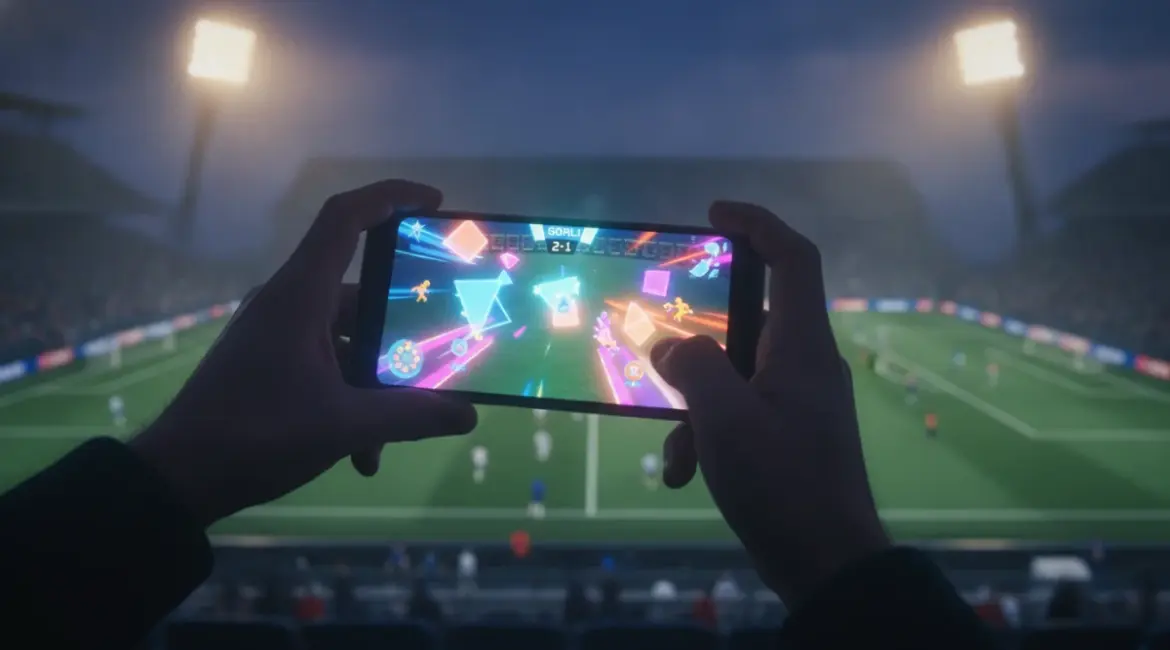
Sports fans are filling the break between halves with fast mobile games instead of waiting passively for the restart. The appeal is simple: these games are quick, easy to learn, and made for a short window of attention.
Why the Break Feels Empty
Halftime often interrupts the rhythm of a match. The pace slows, the action moves off the field, and fans are left with commercials, commentary, or silence. That pause creates a natural opening for something interactive.
Quick mobile games fit that gap because they deliver immediate engagement without demanding a long commitment. Fans can play a few rounds, put the phone away, and return before the second half begins.
What Makes a Game Work in Minutes
The best halftime games are built for speed. They launch quickly, require almost no explanation, and end fast enough to avoid missing live action. That makes them a strong match for stadium crowds and home viewers alike.
Replay value matters just as much. A game that can be played again and again in short bursts keeps the experience lively, even if the break is brief. Simple puzzles, fast sports challenges, and lightweight chance-based games all fit this pattern.
How Better Connectivity Changed the Habit
Stronger stadium Wi-Fi and faster mobile networks have made this behavior much more practical. Fans are no longer fighting the same connection problems that once made gaming in crowded venues frustrating.
Developers also design these games to use little data and respond quickly. That matters during a short break, when a delay of even a few seconds can make the experience feel awkward or incomplete.
The Psychology of Staying Engaged
Halftime gaming works because it keeps the brain active. The first half of a game can create a rush of emotion, and the break can feel like a drop in energy. A quick game helps replace that lull with a fresh burst of attention.
There is also a control factor. Fans cannot influence what happens on the field, but they can affect a game on their phone. That small sense of agency makes the pause feel less passive and more rewarding.
Where Sports Brands Are Taking It Next
Leagues, clubs, and broadcasters are using mobile games to keep fans involved during the break. Some offer prediction challenges tied to the match. Others unlock discounts, prize entries, or fantasy sports updates that keep the audience connected to the event.
This approach turns halftime into part of the entertainment instead of a pause from it. It also helps teams and media brands hold attention longer, which can strengthen loyalty over time.
The next step may be even more immersive. Augmented reality and other interactive formats could let fans take part in virtual challenges that feel connected to the venue itself. For now, though, quick mobile games have already become one of the easiest ways to keep sports excitement alive between halves.