
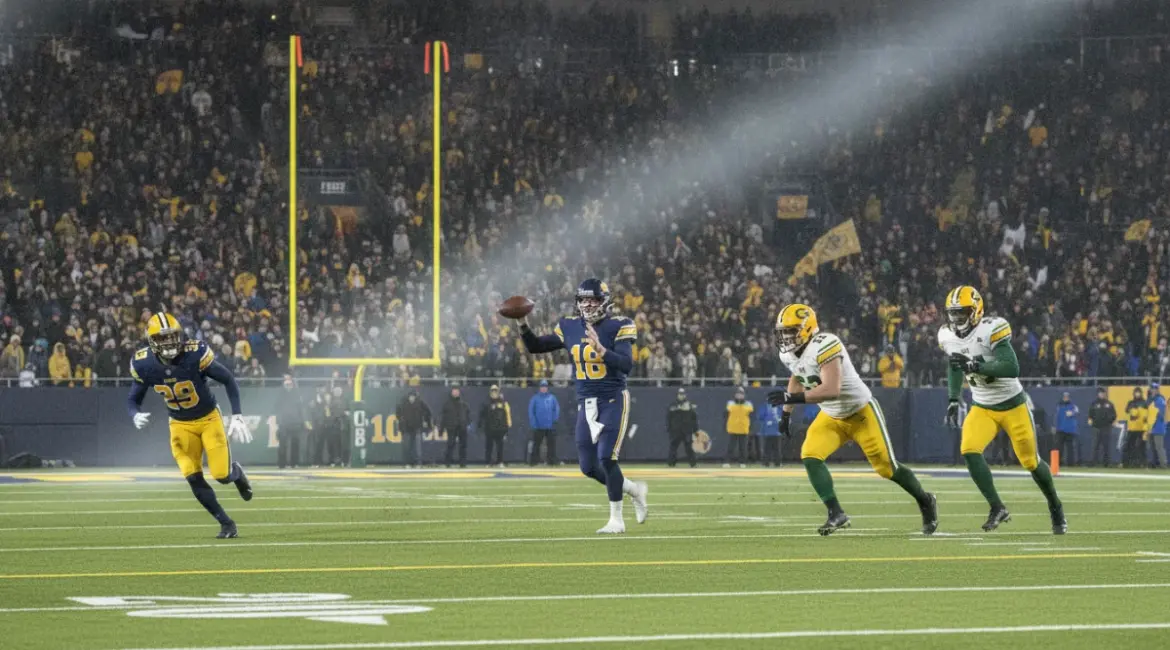
The Winnipeg Blue Bombers head to Edmonton for a Friday night meeting that could shift the tone of the West Division race. The matchup at Commonwealth Stadium arrives with both teams carrying real pressure, but for different reasons.
Winnipeg enters at 4-4, still searching for the steady form that has defined its recent championship runs. Edmonton sits at 6-3 and has already forced the rest of the division to treat it as more than an early-season surprise.
Why Edmonton Has Changed the Conversation
The Elks have built their rise on results that demand attention. Their strong start included three straight wins, and one of those came in a 23-18 victory over Winnipeg that showed Edmonton could handle a proven contender.
That early success was not a fluke. Edmonton also became the first team to beat Montreal this season, earning a dramatic 32-29 overtime win that added another layer to its growing credibility.
Cody Fajardo has been central to that progress. His veteran presence gives Edmonton a quarterback who can work from the pocket, keep drives alive, and stay composed when protection breaks down.
Justin Rankin is another reason the Elks have become difficult to handle. His burst, strength, and receiving ability give Edmonton a versatile threat who can hurt a defense in several ways.
- Edmonton has already beaten Winnipeg once this season.
- The Elks have shown they can win close games against top competition.
- Fajardo and Rankin give the offense a balanced core.
- Home-field advantage adds another edge in the rematch.
Winnipeg Still Has the Tools to Answer Back
The Blue Bombers have not looked as dominant as they did in past seasons, but they remain dangerous because of their experience. Few teams in the league understand pressure football better than Winnipeg.
Zach Collaros is still the key figure on offense. If he gets time to scan the field and attack vertically, Winnipeg can change the game quickly.
Brady Oliveira also matters in a major way. A productive ground attack would help Winnipeg control tempo, reduce the burden on Collaros, and keep Edmonton’s offense from dictating the rhythm.
The first meeting offered a reminder that yardage alone does not decide outcomes. Winnipeg gained 369 yards in that game, yet it struggled to turn those drives into enough points.
- Collaros must avoid pressure and stay efficient.
- Oliveira needs room to build a consistent run game.
- Winnipeg cannot afford costly turnovers again.
- Red-zone execution will matter as much as raw production.
What the Rematch Could Turn On
The line of scrimmage should shape most of the action. If Winnipeg opens lanes for Oliveira and protects Collaros, it can force Edmonton into a longer, more demanding game.
Edmonton, however, will try to make the opposite happen. If the Elks create pressure without losing discipline on the back end, they can make Collaros uncomfortable and disrupt Winnipeg’s passing rhythm.
Defensively, Winnipeg has to keep Rankin from getting loose early. If Edmonton establishes the run and then layers in Fajardo’s short and intermediate passing game, the home team can control possession and wear down the visitors.
Special teams may also play a larger role than usual. In a tight CFL matchup, hidden yards, field position, and clean kicking often decide which team leaves with the win.
Big Stakes for Both Sides
This is not just another midseason game. Edmonton is trying to prove that its strong opening stretch reflects real playoff-level quality, while Winnipeg is trying to show that its championship standard is still intact.
The Elks have the better record and the home crowd, but the Blue Bombers bring the sort of veteran core that can still win tough road games. That combination makes the matchup especially important for the division standings.
If Edmonton wins again, it strengthens both its playoff position and its claim as a legitimate West contender. If Winnipeg gets revenge, it can reshape the narrative and give itself valuable momentum for the second half of the schedule.
Either way, the result on August 21 should tell a lot about where both teams stand when the pressure starts to rise.