
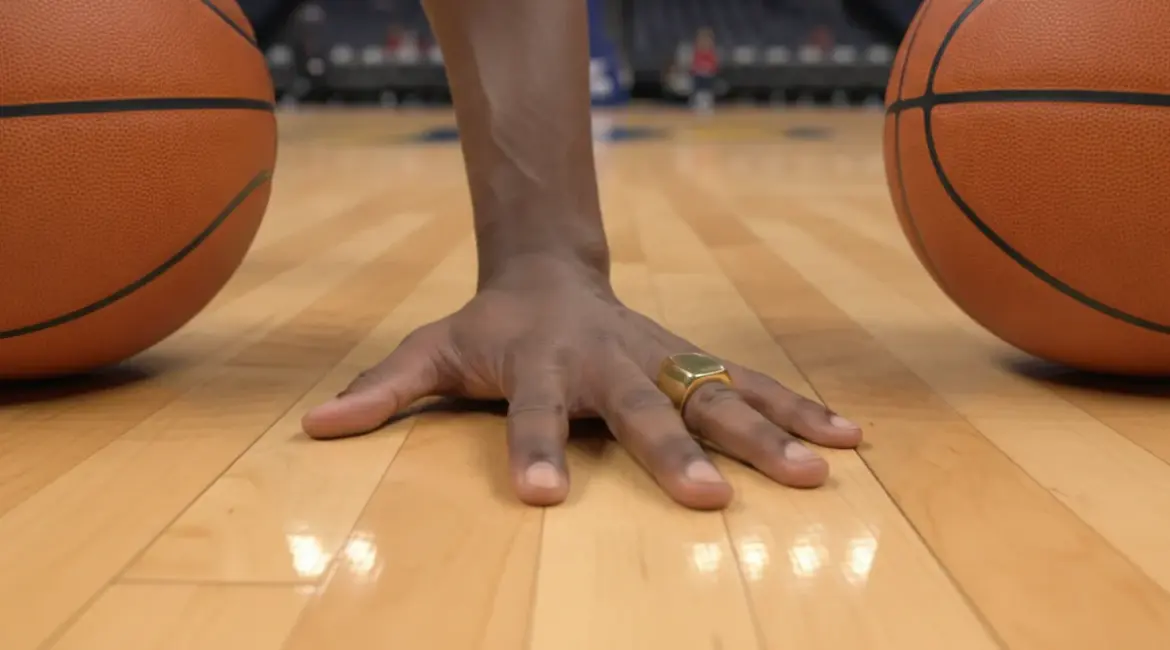
Russell Westbrook has stepped away after 18 NBA seasons, closing a career defined by explosive pace, fearless competition, and a statistical footprint that no other guard has matched. His retirement marks the end of one of basketball’s most forceful eras, with a legacy built on production that changed how fans judged consistency and intensity.
Westbrook, 37, made the decision public on Wednesday. NBA insider Chris Haynes framed the moment as bittersweet, which fits a career that combined spectacular highs, stubborn resilience, and an almost constant drive to prove something every night.
A Guard Who Played With Pure Force
Westbrook’s career numbers are remarkable on their own: 20.9 points, 8.0 assists, 6.9 rebounds, and 1.6 steals per game. Yet those averages only hint at how he played. He attacked the game with rare speed, strength, and aggression, forcing defenders to react before they could settle into position.
Scott Brooks, who coached Westbrook with both the Oklahoma City Thunder and the Washington Wizards, recognized that style early. After watching Westbrook at his pre-draft workout, Brooks said he immediately understood how difficult he would be to contain.
“Thank goodness I’m not an NBA point guard anymore because there’s no way I can stay in front of this guy.”
Brooks later repeated that Westbrook remained one of the easiest stars to coach because his effort never dipped. His view did not change as Westbrook moved through different teams and different stages of his career.
“The guy’s a winner and he’s fun to coach because he competes every night and he wants it every night.”
The Triple-Double Record Book Belongs to Him
If one stat defines Westbrook, it is the triple-double. He did not just collect them; he turned them into a regular feature of his game and, in doing so, reshaped a rare statistical category into something expected.
Westbrook finished his career as the NBA’s all-time leader in triple-doubles with 209. He also owns the single-season record with 42, a mark that came during his historic 2016-17 campaign.
That season was his masterpiece. He averaged 31.6 points, 10.7 rebounds, and 10.6 assists per game, captured the Kia NBA MVP award, and broke Oscar Robertson’s single-season triple-double record. He also became one of only three players in league history to average a triple-double over a full season, joining Robertson and Nikola Jokić, while remaining the only player to do it four times.
| Milestone | Westbrook’s mark | Meaning |
|---|---|---|
| Career triple-doubles | 209 | Most in NBA history |
| Single-season triple-doubles | 42 | League record |
| Triple-double seasons | 4 | Only player to reach that total |
| Triple-double team record | 153-56 | .732 winning percentage when he posted one |
His season totals show how sustained that production really was:
- 18 triple-doubles in 2015-16
- 42 in 2016-17
- 25 in 2017-18
- 34 in 2018-19
- 38 in 2020-21
That output was not empty accumulation. When Westbrook recorded a triple-double, his teams usually won, which is one reason those performances carried so much weight in real games rather than just in highlight packages.
From UCLA to the Thunder’s Rise
Westbrook grew up near Los Angeles and spent two seasons at UCLA before the Thunder selected him with the No. 4 pick in the 2008 NBA Draft. Oklahoma City had already drafted Kevin Durant one year earlier, and James Harden would arrive in 2009, giving the franchise a young core that quickly became one of the league’s most exciting groups.
Westbrook made an immediate impact. As a rookie, he averaged 15.3 points, 5.3 assists, and 4.9 rebounds, earning a place on the All-Rookie Team. Brooks called that line difficult to achieve, and the numbers show why: many players never come close to that balance across an entire career, let alone in year one.
The team’s rise came soon after. With Durant, Harden, and Westbrook leading the way, Oklahoma City reached the playoffs in 2010, advanced to the Western Conference Finals in 2011, and reached the NBA Finals in 2012 before falling to the Miami Heat.
A Résumé That Fits the Hall of Fame
Westbrook’s career achievements extend far beyond one famous statistic. His honours place him among the most decorated point guards the league has seen.
- Nine-time All-NBA selection
- Nine-time All-Star
- Two-time All-Star MVP
- Two-time scoring leader
- Two-time assists leader
- 2012 Olympic gold medallist
- Member of the NBA’s 75th Anniversary Team
Those honours tell only part of the story. They confirm greatness, but they do not fully capture the relentlessness that made Westbrook distinct. He competed with an edge that often felt physical even before the opening tip, and that tone shaped every stop of his career.
After Oklahoma City, The Work Continued
Westbrook spent 11 seasons with the Thunder, the most important stretch of his playing life, but his path eventually stretched across the league. He later played for the Houston Rockets, Washington Wizards, Los Angeles Lakers, LA Clippers, Denver Nuggets, and Sacramento Kings.
His Wizards season in 2020-21 offered another reminder of how much he could still create. Brooks said Westbrook’s influence went well beyond the box score and praised the guard’s preparation, basketball sense, and ability to leave a mark on every game.
“What Russell does for us goes beyond the stat sheet and he fills the stat sheet like nobody in the history of this game. He’s going to go down as one of the best point guards of all time. His IQ is through the top. His preparation is through the top.”
Westbrook has also framed his career in simple terms: effort first, every night. That attitude has long been the centre of his public identity and the reason so many coaches and teammates have spoken about him with unusual certainty.
“I always pride myself on making sure I leave it on the floor every single night,” he said. “I’ve been blessed and given an opportunity to be able to do that, and I don’t take it for granted.”
His Legacy Reaches Beyond Basketball
Retirement does not mean Westbrook’s influence ends. His Why Not Foundation focuses on empowering underserved communities through educational opportunities, workforce development, and accessible mental health resources. That work reflects the broader shape of his career: competitive on the court, committed off it.
Westbrook has said his legacy is not limited to what happened in arenas. He has pointed instead to the people he has affected, inspired, and supported along the way. That perspective gives his retirement a different kind of weight, because his impact was never only about points, assists, or rebounds.
Russell Westbrook leaves the NBA as an MVP, an all-time triple-double leader, a championship-era cornerstone for Oklahoma City, and one of the most recognizable guards the sport has ever produced. His records will stand for a long time, but his real signature is harder to measure: he played every possession as if it mattered more than the last one.