
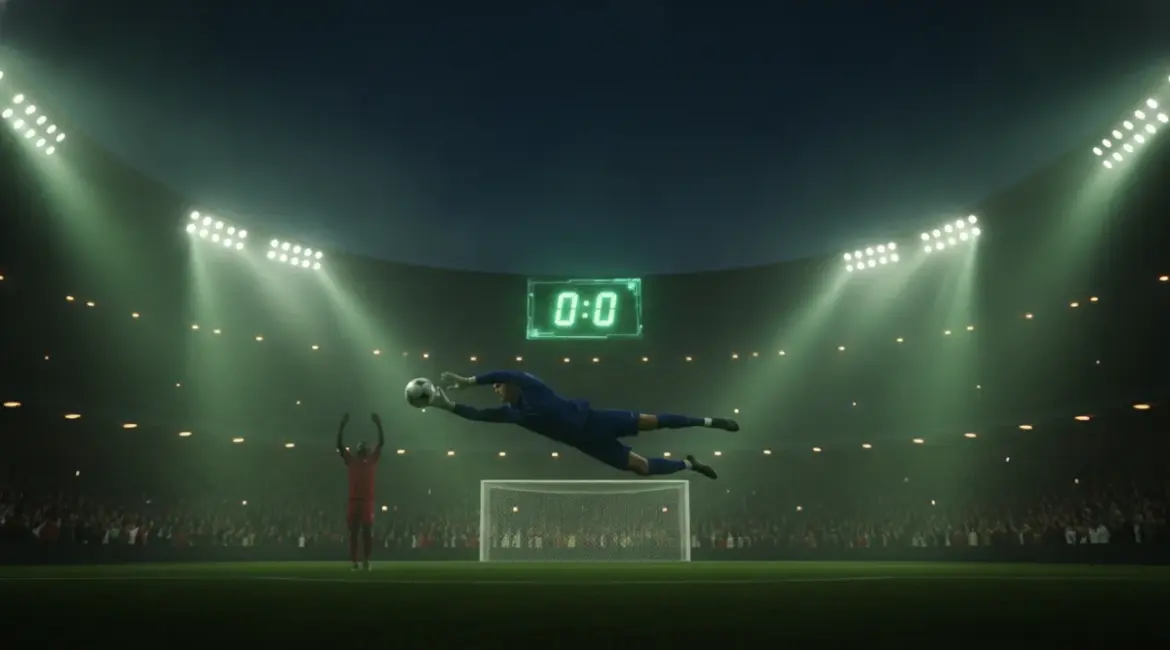
The smallest team in Group H arrived in Atlanta as a heavy underdog and left with a point against a European power. That was not random fortune; it was a statement.
Cape Verde’s first World Cup appearance delivered one of the tournament’s earliest shocks, but the scoreless draw with Spain was no accident. At Mercedes-Benz Stadium, the Blue Sharks stood up to relentless pressure, protected their penalty area with discipline, and refused to be overwhelmed by a far more decorated opponent.
Spain controlled the match in the way expected of a favorite, yet control did not translate into goals. Cape Verde absorbed wave after wave of attack, stayed compact between the lines, and kept its composure when the game seemed to tilt heavily toward La Roja. By the final whistle, the result felt less like a surprise and more like proof that this squad had arrived prepared.
Why Spain Could Not Break Through
The match followed a familiar pattern for long stretches: Spain had the ball, Cape Verde had the plan. The European side finished with 27 shots, seven on target, and an expected goals total of 2.29, numbers that usually produce a comfortable win. Instead, they ran into a goalkeeper who refused to blink.
Vozinha, who turned 40 only two weeks before the tournament, delivered a performance that defined the night. He made seven saves, several from dangerous close-range chances, and gave Cape Verde a chance to survive every late surge. In front of him, the defensive unit stayed disciplined, with Diney Borges and Roberto “Pico” Lopes doing heavy work to block passing lanes, clear danger, and force Spain wide whenever possible.
Spain also complicated its own task. Luis de la Fuente kept Lamine Yamal on the bench until about the 70th minute, and the team lacked natural width before the teenager entered. By then, Cape Verde’s shape was settled, its confidence had grown, and the visitors were no longer playing like a team hoping merely to avoid embarrassment.
One late chance captured the spirit of the night. Borges rose for a header that could have stolen all three points, but Unai Simón kept it out. That single moment summed up the contest: Spain had more of the ball, but Cape Verde had enough quality and belief to make the favorite sweat until the end.
- Spain’s edge: possession, shot volume, and sustained territory
- Cape Verde’s edge: structure, resilience, and a goalkeeper in top form
- Decisive factor: the Blue Sharks stayed organized even during Spain’s best spells
What This Result Says About Cape Verde
The draw matters because it fits a larger pattern. Cape Verde did not stumble into the finals by chance. Under Pedro “Bubista” Brito, the team produced seven wins, two draws, and only one loss in African qualifying, finishing four points ahead of Cameroon. That is the profile of a team that earned its place rather than borrowing it.
The squad also has more depth and professional experience than many casual observers realize. Players come from clubs across Europe and Major League Soccer, including Trabzonspor, Shamrock Rovers, and Columbus Crew. Dailon Livramento, who delivered key goals during qualifying, is part of a group that knows how to execute a plan rather than simply hope for one.
There is also a broader tournament argument here. Critics have warned that expanding the World Cup from 32 to 48 teams could dilute the event. Cape Verde offered a direct rebuttal. While other debutants have struggled badly, the Blue Sharks became only the seventh team in World Cup history to avoid defeat in its first match at the finals.
| Category | Cape Verde | Spain |
|---|---|---|
| Final result | 0 | 0 |
| Shots | Limited chances | 27 |
| Shots on target | Few but dangerous late | 7 |
| Key strength | Defensive structure | Ball control |
| Standout performer | Vozinha | Unai Simón |
The Bigger Picture for Group H
Historical significance does not automatically produce progress, though, and Cape Verde still face a demanding group. Uruguay and Saudi Arabia remain on the schedule, and both matches will require more than stubborn defending. If the Blue Sharks want to reach the knockout stage, they will need to turn chances into goals and show they can threaten in transition for a full 90 minutes.
Spain will still expect to finish the group strongly, especially once Yamal is fully ready to start. Even so, this opening result changed the conversation around Cape Verde immediately. They are no longer being discussed as ceremonial participants or one-game curiosities. They look like a team that can disrupt expectations, force better opponents into uncomfortable matches, and make every possession count.
That is why the draw feels important beyond the point itself. Cape Verde did not merely survive; it demonstrated discipline, nerve, and enough technical quality to belong on the same field as one of the world’s best teams.